
Provider
As renewable energy continues to expand, volatility in the electricity system is increasing. Electricity generation and consumption need to be balanced at ever shorter notice. Batteries can play an important role because they can react very quickly and both absorb and release electricity. But this technical capability alone is not enough. What matters is how the battery is deployed in the market.
The constraint is not only capacity, but also the right time to use it
Technical operation ensures that the battery functions reliably. Battery optimisation determines when and how its flexibility is deployed in the market. Although a battery can react very quickly, its storage capacity is limited. If it operates at full power, the stored energy is often sufficient for only a few hours. This means that if the battery is deployed too early, it may no longer be available later when market conditions are even more attractive.
Assume, for example, that a battery can operate at full power for four hours per day, which is a typical cycling profile for large-scale batteries. The key question then becomes: When is deploying the battery most valuable?
A decision has to be made as to whether its flexibility should be used in the day-ahead market, intraday trading or for balancing services. This decision depends on prices, forecasts and the battery’s state of charge.
BKW combines market access with trading expertise to make the best decision. Market access means that BKW has access to the relevant exchanges for trading electricity, connects the batteries technically to the power grid and registers them with the grid operator so that they can participate in balancing markets. Trading expertise means understanding the markets and assessing where a battery’s flexibility can create the greatest value. This requires both experience in electricity trading and a sound understanding of how batteries can be operated technically. The battery is therefore not run according to a fixed schedule. Instead, it is continuously and automatically optimised based on market opportunities and technical capabilities.
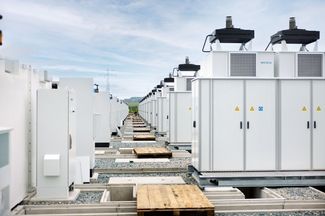
Which markets can a battery participate in?
- Day-ahead market
- An auction market for the following day. Bids can be submitted for each quarter-hour period. Whether a bid is accepted depends on supply and demand.
- Intraday market
- A continuous market in which quarter-hour products can be traded until shortly before delivery. This allows new information, price movements or changes in fore-casts to be taken into account at short notice.
- Ancillary services / balancing energy
- Products procured by grid operators to maintain grid stability. Participants that are awarded a contract reserve capacity and can be activated when required.
What determines economic success?
Whether a battery is managed successfully from an economic perspective depends on several factors. High technical availability is essential, meaning as few outages as possible and limited degradation over time. Grid constraints should also be minimised, while strong market knowledge and access to the relevant markets are equally important. Speed is another key factor. Particularly for batteries operating across multiple markets, prices, forecasts and availability change continuously. To respond effectively, information must be processed quickly and translated into concrete decisions. Current data is used to generate forecasts, for example on how prices or market opportunities may develop. Based on these forecasts, optimisation models calculate the most effective deployment of the battery. The resulting trading decisions then need to be executed and translated into dispatch signals for the battery.
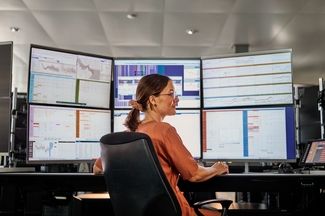
This entire process must work quickly and reliably: data is collected, forecasts are updated, deployment is optimised, trading decisions are executed and the battery is controlled accordingly. And this happens around the clock, quarter-hour by quarter-hour. That is why automated trading processes, known as algorithmic trading, a stable IT setup, technical understanding of the asset and the experience of the trading teams are all crucial.
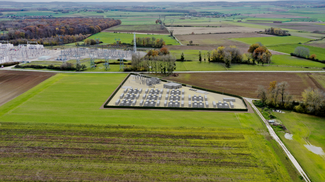
Battery optimisation also differs from one country to another. Market mechanisms, products, regulatory requirements and operational processes vary between electricity markets. This is precisely why projects in different countries are important for building broad optimisation expertise. With projects in Switzerland, Darmstadt/Stalldorf in Germany, Hauts-de-France and Centre-Val de Loire in France and Northern Italy, BKW is already building its expertise across four key European flexibility markets.
From storage asset to market participant
Batteries are already an important component of the energy system and will become even more important in the future. The key is not to view them simply as storage assets. Their value is created when their flexibility is actively managed and deployed in the right markets. This is how technical flexibility becomes tradable flexibility and how a storage asset becomes an active market participant.






Comments