
What exactly is a control power call-off?
With a control power call-off, Swissgrid, the operator of the Swiss transmission system, intervenes when necessary to keep the electricity grid in balance. It does so by requesting additional energy or reducing excess energy to stabilise the grid frequency. As Swissgrid does not operate any power plants of its own, it procures the necessary flexibility on the control energy market. There, it can call off energy as needed by activating power plants or consumers to either increase or decrease their output or consumption.
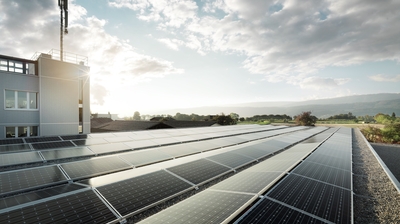
Interventions by Swissgrid are becoming more and more necessary, as the proportion of renewable energies in the electricity supply is increasing sharply, particularly due to the expansion of photovoltaics. Weather-dependent and decentralised electricity generation is harder to predict, which can lead to more fluctuations in the electricity grid. Compensating for these fluctuations and ensuring grid stability requires systems that can respond flexibly. This is where control power comes in. The stability of the electricity grid is measured using grid frequency: if it is above 50 hertz, there is too much electricity in the grid; if it is below, there is too little electricity. Power plants and consumers will then have to take appropriate countermeasures.
There are three types of control power: primary, secondary and tertiary control. Primary control reacts automatically within milliseconds, secondary control reacts within seconds following a signal from Swissgrid and tertiary control is activated within minutes. The entire process is largely automated, since it is time-critical.

In Switzerland, Swissgrid is responsible for calling off and tendering control power. In Germany, this role is performed by the four transmission system operators, which include TransnetBW and 50Hertz. The mechanisms are similar, but balancing takes place in a larger, more integrated market.
We often hear the terms positive and negative control power. What is the difference?
Positive control power means that additional power is fed into the grid or consumption is reduced. A classic example is an emergency generator that is switched on to provide more electricity.
With negative control power, feed-in is reduced or consumption is increased – such as when a hydropower plant curbs its output or a heat pump uses slightly more electricity. There are also systems that can do both, such as pumped-storage power plants. They can adjust their output in both directions. Never at the same time, of course, but still with the necessary flexibility.
How often is control power actually called off?
All the time. With a few exceptions, primary control power is permanently active because small frequency deviations are constantly occurring in the grid. Secondary control power is switched on as required.
Tertiary control power is used for larger deviations and, in practice, is activated several times a day. Call-offs typically range from zero to 100 megawatts. In the case of greater imbalances, however, they can be as much as 300 or 500 megawatts. They are then correspondingly more expensive, as large call-offs are traded at higher prices.
«Interventions by Swissgrid are becoming more and more necessary, as the proportion of renewable energies in the electricity supply is increasing sharply, particularly due to the expansion of photovoltaics.»

Which systems are particularly well suited to providing control power?
In theory, any system that can be flexibly controlled. In practice, several factors come into play, particularly the availability of the system and the effort involved in connecting it. Large systems are usually more economical because the fixed costs of technical integration are less significant in relation to the their size.
Systems that are available around the clock and do not affect complex industrial processes during operation are ideal. These include hydropower plants, PV or biomass plants, steam turbines and battery storage systems.
Industrial plants are also suitable for participating in the control energy market. There is strong demand for industrial flexibility, especially in the German market. What matters most is that operational workflows and industrial processes are carefully coordinated together with the system operators. This ensures that the flexibility is used to its full potential without disrupting production or other important processes.
Powerflex bundles flexible systems into a single virtual power plant. How does it work?
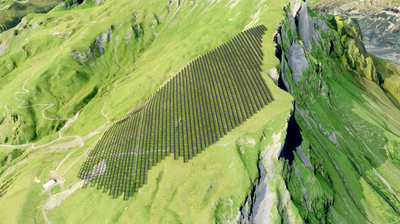
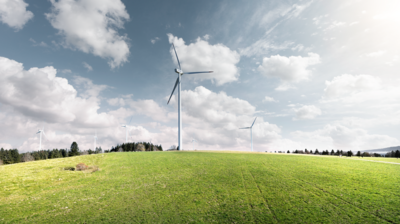
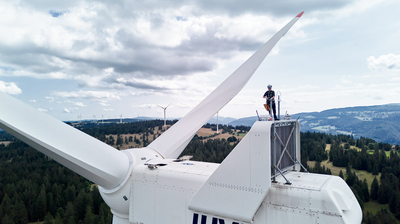
With Powerflex, we also enable smaller and intermittently available renewable systems, such as photovoltaic and wind power systems, to participate in the control energy market. Not only in Switzerland, but also in other European countries such as Germany. Via our virtual power plant, these systems are securely connected, automatically controlled and activated as required, such as via a preconfigured control box.
For the operators, this means additional income: they are compensated for making their systems flexibly available and for supplying or receiving electricity when needed. At the same time, they make an active contribution to grid stability and the energy transition.
How is the control energy market likely to evolve in the future?
The rapid expansion of photovoltaics is expected to continue in the coming years. Grid stabilisation by means of control power will therefore become even more important throughout Europe. At the same time, new grid-stabilisation mechanisms, such as dynamic electricity tariffs, may also be introduced.
However, regardless of the market, flexibility remains the decisive factor. It is key to keeping the system stable.
I see enormous potential here, both in terms of grid stability and from an economic point of view. Companies can use their flexibility to reduce costs or generate revenue while contributing to the energy transition at the same time.
What’s your conclusion?
Flexibility is a valuable resource. Those who have it can not only benefit economically, but also make an important contribution to a stable and sustainable energy system and thus to the energy transition.

Comments