BKW supports the energy transition
Switzerland has signed the Paris Agreement and committed to becoming climate-neutral by 2050. To achieve this, the shift from fossil fuels to renewable energy sources must be accomplished. Switzerland’s current energy mix is comprised mostly of petroleum fuels, propellants, electricity and gas. Approximately 70% of energy consumption is covered by imported, mostly non-renewable energy. The Energy Act (EnA) outlines the goal to replace fossil fuels and increase the production of renewable energy, excluding hydropower, to 35 terawatt-hours by 2035 and 45 terawatt-hours by 2050 (Art. 2(1) EnA). The net production of electricity from hydropower is to increase to at least 39,200 gigawatt-hours by the same year (Art. 2(2) EnA).
BKW supports the energy transition holistically. On the one hand, it expands renewable electricity production, thus enabling the substitution of fossil fuels. On the other, it offers energy-efficient solutions for infrastructure and buildings. Lastly, it continuously advances the expansion of the power grid, thus enabling the transformation towards more decentralised and locally produced energy. BKW also aims to contribute to reducing its own greenhouse gas emissions, targeting net-zero Scope 1 and 2 emissions by 2040, and aiming for net-zero in Scope 3 by 2050. Compared to 2022, it will halve its greenhouse gas intensity, i.e. CO2 equivalents per kilowatt-hour of energy produced, by 2030.
Planning and approval processes need to be accelerated
Investments in projects for renewable energy generation facilities are often confronted with lengthy procedures and steep hurdles, which put the implementation of the energy transition and the achievement of Switzerland’s climate goals at risk. Projects in the hydropower and wind energy sectors in particular can be blocked for decades, as outlined in this blog post. In view of these circumstances, BKW supports the goal of simplifying and accelerating planning and approval processes. At the same time, it emphasises that a partnership agreement is the best way to implement large projects effectively.
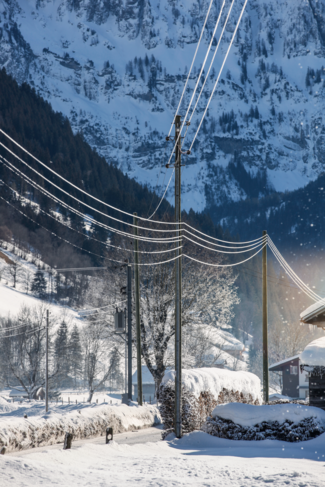
As the largest distribution network operator in Switzerland, it is also important to BKW that, in addition to expanding production, the expansion and conversion of power grids are accelerated. The rapid increase in photovoltaic systems, electromobility and heat pumps requires a matching grid infrastructure so that locally produced electricity can be distributed to where it is immediately consumed. Since this is the task of the power grid, it must always be considered in the energy transition. The right underlying conditions must be created so that the power grid enables the energy transition, and so that cumbersome approval processes and spatial planning hurdles do not turn the distribution grid into the bottleneck of the energy transition.
Winter energy and flexibility are key
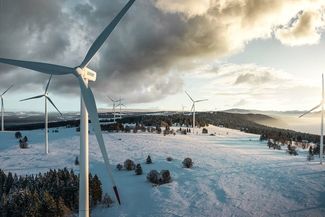
The Swiss government wants to implement the energy transition primarily with solar power systems, which produce a lot of electricity, especially in the sunny summer months. The expansion of photovoltaics is important, but it must be accompanied by appropriate measures to avoid the expected surpluses in summer and potential deficits in winter. Production facilities with a high proportion of winter electricity – i.e. photovoltaic systems at higher altitudes and with steeper tilt angles as well as wind power plants and storage power plants – should receive special attention.
Because solar and wind power plants are only conditionally controllable and production and consumption must always be balanced in the power grid, flexibility is also crucial. Flexibility can be offered both on the production side, for example, through storage power plants or battery storage, and on the consumption side.

Frequently asked questions
To do its part for climate protection, BKW aims to reduce its emissions to net-zero as a group overall. By 2040, BKW aims to achieve net-zero Scope 1 and 2 emissions and plans to halve its greenhouse gas intensity by 2030 compared to 2022. Focussing on renewable energy is an important lever to achieve this ambitious goal. The Energy Strategy 2050 provides a legally established framework for these efforts. BKW is continuously expanding renewable energy production. In 2024, 64% of its electricity production came from renewable sources and the renewable share of heat produced by BKW was 92%.
With the BKW Solutions 2030 strategy, BKW is driving the holistic energy transition forward and addressing all the needs of the new world of energy. It consists of the three elements of growth, excellence and sustainability. BKW places sustainability at the centre of all its activities and pursues ambitious sustainability goals focussing on climate, energy, nature and people. Part of this is the expansion of renewable energy. BKW focusses on investments in renewable and efficient energy infrastructures and aims to increase the installed capacity of renewable energies from 2.7 GW in 2024 to 3.4 GW by 2030.
Approval procedures for renewable energy projects are often lengthy and can take more than two decades. BKW is also affected by these delays. There are essentially three reasons for this:
- Regulatory hurdles: The multi-stage spatial planning and approval procedures required in Switzerland take a long time and offer many opportunities for complaints.
- Social acceptance: There is often resistance from the population, especially when it comes to wind energy projects, leading to long discussion and legal decision processes.
- Technical challenges: Adapting and integrating new technologies into the existing infrastructure requires extensive planning and coordination.
BKW is working continuously to overcome these challenges by developing innovative solutions and relying on long-term partnerships.
Integrating renewable energies into the power grid requires significant expansion of grid capacities. Currently, the existing infrastructure lags behind the expansion of renewable energies. Particularly the lower network levels, into which decentralised produced renewable energy is fed (e.g. from photovoltaic systems on rooftops), need to be expanded or reinforced. The grid must be able to handle these increasingly bidirectional energy flows and reliably supply customers with electricity even when photovoltaic systems produce no electricity due to bad weather or at night. This means that, given the rapid expansion of photovoltaic systems, electromobility and heat pumps, the energy transition requires powerful grids. A “grid express” is therefore necessary for distribution networks in particular in order to accelerate this expansion and conversion of the power grids for the energy transition.
BKW is committed to a safe and low-CO2 electricity supply. It has always advocated for openness to new technologies and continues to do so. Regardless of the debate on lifting the ban on new nuclear power plants, the expansion of renewable energies, particularly to strengthen electricity supply in winter, must be urgently advanced. BKW has no plans to build a new nuclear power plant but is focused on implementing the projects that are already planned for electricity generation from renewable energies.